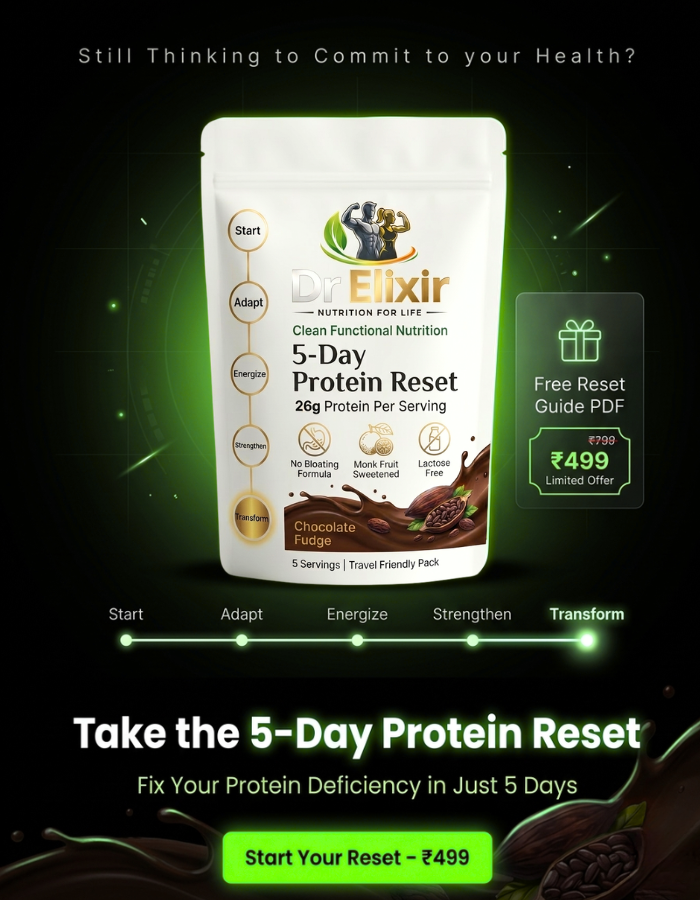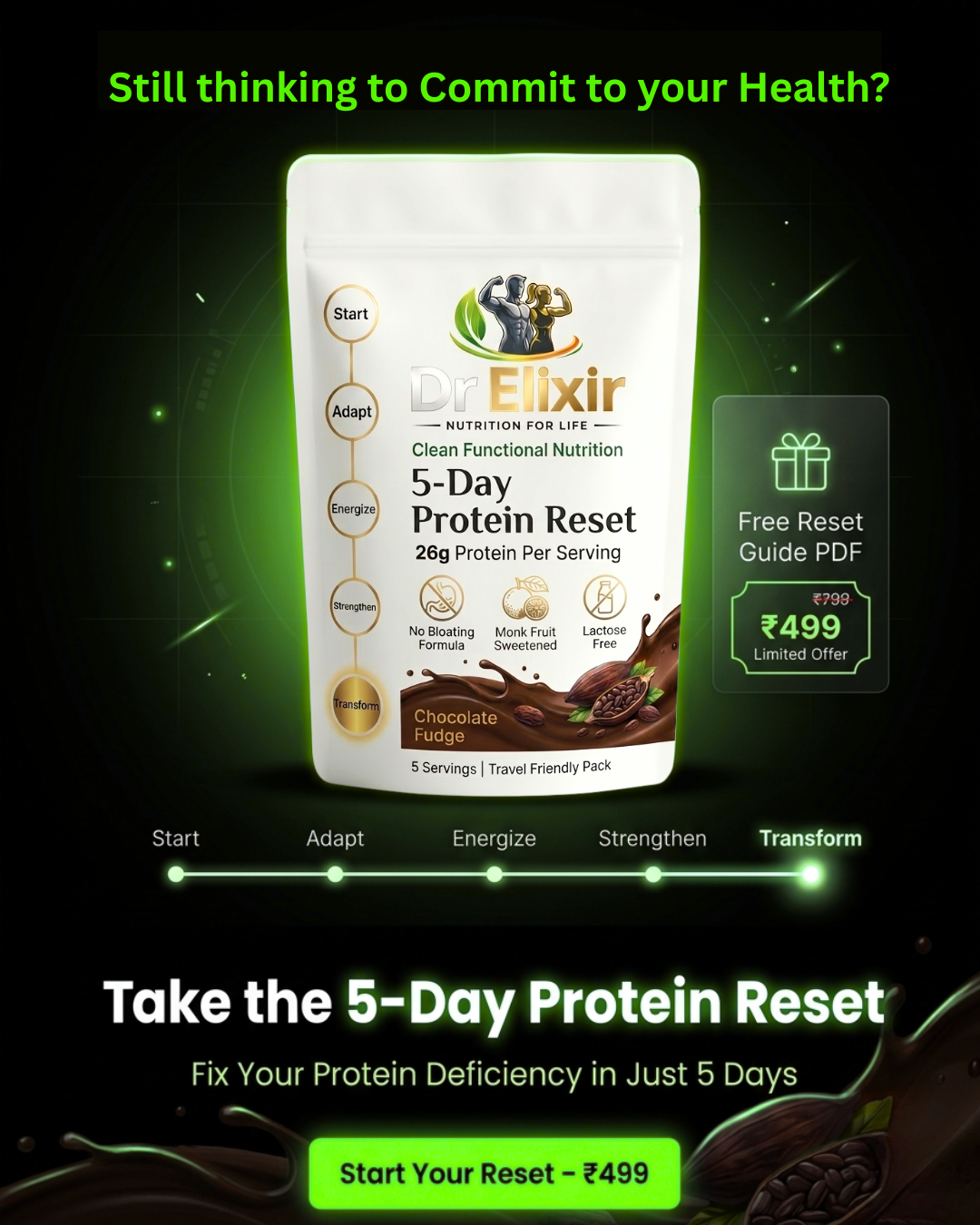

One of the most common questions patients ask is:
“If I eat healthy food, do I still need supplements?”
The honest answer is: it depends on your lifestyle, diet quality, and health goals.
In theory, a perfectly balanced diet can provide all essential nutrients — protein, vitamins, minerals, fiber, and healthy fats. But in reality, modern Indian lifestyles make this difficult.
Busy schedules, irregular meals, stress, low sunlight exposure, and processed foods often create nutrient gaps — even in people who “eat clean.”
When Food May Be Enough
If you:
- Eat balanced home-cooked meals
- Include adequate protein daily
- Consume fruits and vegetables regularly
- Get enough sunlight
- Have no deficiencies in blood tests
You may not need routine supplementation.
However, very few people consistently meet all these conditions.
Common Nutrient Gaps in India
Doctors frequently see low levels of:
- Protein (especially in vegetarian diets)
- Vitamin D (despite living in a sunny country)
- Vitamin B12 (common in vegetarians)
- Iron (especially in women)
These deficiencies can lead to fatigue, poor immunity, hair fall, low mood, and reduced muscle strength.
When Supplements Make Sense
Supplements are helpful when:
- Your diet lacks variety
- You have confirmed deficiencies
- You are vegetarian or vegan
- You train intensely
- You are pregnant, elderly, or managing specific health conditions
They are not shortcuts — they are nutritional support tools.
Supplements are not a replacement for real food.
But in today’s fast-paced world, they can help bridge gaps and support long-term health — when chosen wisely and used under proper guidance.Food is the foundation.
Supplements are reinforcement — not the main structure.